China Top 10 Cargo Electric Bike Manufacturers?

China’s cargo electric bike industry has grown from small workshop production into a competitive manufacturing sector. Today, Chinese suppliers serve delivery companies, retailers, farms, campuses, and urban families worldwide. However, choosing a reliable manufacturer requires more than comparing factory photos or low prices.

This guide examines China’s top 10 cargo electric bike manufacturers through practical criteria. These include production experience, frame design, motor performance, battery safety, payload ratings, quality control, and after-sales support. We also consider factory capabilities, export experience, certifications, and the availability of replacement parts. A strong cargo electric bike should carry real weight without feeling unstable on narrow streets or uneven warehouse floors. Details matter. Weld quality matters. So does the braking distance.

The ranking is not presented as an absolute truth. Manufacturing information can change, and public data is sometimes incomplete. Some companies publish impressive specifications but provide limited evidence from long-term field use. That deserves caution. We will therefore distinguish verified strengths from marketing claims whenever possible. Buyer needs also vary. A courier fleet may value service coverage and battery interchangeability, while a family buyer may prioritize comfort, weather protection, and simple maintenance.

Readers can use this overview to compare manufacturers more intelligently. We will highlight suitable applications, possible limitations, and questions worth asking before placing an order. No supplier is perfect. That is important. A dependable decision comes from checking samples, testing loaded performance, reviewing warranty terms, and confirming compliance with the destination market’s safety requirements.
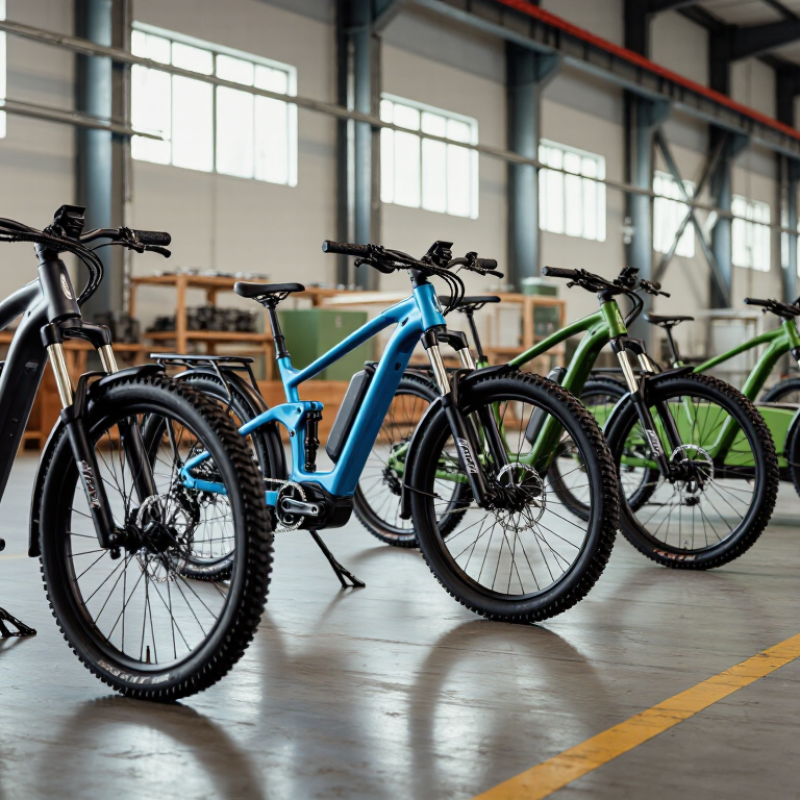
China Top 10 Cargo Electric Bike Manufacturers?

Definition and Role of Cargo Electric Bike Manufacturers in China

Cargo electric bike manufacturers in China design and produce bicycles for moving goods, tools, and equipment. Their work includes frame engineering, battery integration, motor selection, braking systems, and quality testing. Unlike ordinary bicycles, cargo models need stronger frames and carefully balanced load capacity. A practical manufacturer also studies delivery routes, warehouse conditions, weather, and daily riding habits.

These manufacturers support urban logistics, local businesses, and low-emission transport. They may supply long-tail bikes, front-loading cycles, compact delivery models, and customized fleet solutions.

Factory experience matters here. Engineers test steering under heavy loads, measure braking distance, and inspect battery protection systems. Small details matter. A loose rack can become a serious problem.

Reliable manufacturers should provide clear specifications, traceable components, documented testing, and responsive technical support. Independent checks can strengthen trust, especially for overseas buyers. However, product claims are not always easy to compare. Rated capacity may differ between testing conditions and real streets.

Buyers should request sample units, maintenance information, warranty terms, and compliance documents before placing large orders. Even experienced teams can overlook rider comfort or repair access. That weakness deserves attention.

A strong Chinese manufacturer is not only a production supplier; it is an engineering partner that connects cargo design with safer, more practical daily transport.

Key Criteria for Ranking China’s Top 10 Cargo E-Bike Manufacturers

China Top 10 Cargo Electric Bike Manufacturers

Ranking China’s top cargo e-bike manufacturers requires more than comparing catalogue prices. The IEA’s Global EV Outlook 2024 reports that electric two- and three-wheelers represented over half of global electric vehicle sales in 2023. This growth makes testing discipline essential. A credible ranking should examine factory experience, annual output, welding consistency, payload performance, braking distance, and battery traceability. A strong frame should remain stable with a full box, two batteries, and uneven pavement.

Real-world reliability matters most.

Battery safety deserves separate attention. The United Nations Economic Commission for Europe’s Regulation No. 136 provides a useful reference for rechargeable battery safety in certain vehicle categories. However, compliance claims must be checked against current markets and vehicle classes. Independent laboratory reports, production audits, and documented quality-control procedures should carry more weight than polished product pages. Range should be measured under stated loads, temperatures, and road conditions. Otherwise, the figure may look precise but remain misleading.

After-sales support also separates serious manufacturers from temporary exporters. Rankings should review spare-parts availability, warranty response times, software support, and service coverage. The World Bank’s logistics research repeatedly links delivery efficiency with dependable infrastructure and predictable operating costs. That principle applies here. A manufacturer offering lower prices may still create higher costs through broken racks, weak controllers, or delayed parts. No ranking is perfectly neutral. Shipment records can be incomplete, and test samples may not represent every production batch. That limitation should remain visible.

Key Criteria for Ranking China’s Top 10 Cargo E-Bike Manufacturers

This comparison framework uses practical procurement criteria commonly applied to cargo electric bikes. The percentages represent the recommended importance of each criterion when evaluating manufacturers, rather than data from any specific company or brand.

A strong manufacturer should balance carrying performance, battery capability, safety compliance, production quality, customization, after-sales support, and delivery reliability.

Profiles of the Top 10 Chinese Cargo Electric Bike Manufacturers

China Top 10 Cargo Electric Bike Manufacturers?

China’s leading cargo electric bike manufacturers serve very different working conditions. One focuses on compact urban delivery bikes with low step-through frames. Another builds longtail models for groceries, tools, and small parcels. A third specializes in three-wheel cargo platforms for stable neighborhood transport. These designs often use reinforced steel or aluminum frames, hydraulic brakes, and removable batteries.

Several manufacturers target commercial fleets. One develops modular boxes for food distribution and service technicians. Another builds high-load tricycles with weather-resistant compartments. A rural specialist provides wider tires and stronger suspension for uneven roads. A folding-bike manufacturer saves storage space, though folding joints may require closer inspection. A custom engineering factory adapts wheelbases, racks, and controllers for specific orders. The tenth profile is an export-oriented producer that coordinates packaging, testing, and replacement parts.

Reliable evaluation requires more than attractive photographs. I would check weld consistency, brake performance, battery protection, payload testing, and charger documentation. Factory visits can reveal assembly discipline. Sample units matter more than promises. Some suppliers provide useful technical files but weak after-sales communication. Others respond quickly yet offer limited testing evidence. That gap deserves attention. Buyers should confirm regional safety requirements, warranty terms, spare-part availability, and realistic delivery capacity before signing contracts. A cargo bike may look powerful in a catalog, but daily performance depends on balance, heat management, road conditions, and maintenance habits.

Comparison of Product Features, Production Capacity, and Market Reach

China’s top ten cargo electric bike manufacturers should be compared beyond catalogue prices. Product features reveal practical differences. Leading models often offer 200–350 kg payloads, modular boxes, hydraulic brakes, and removable batteries. Some provide dual-battery systems for delivery routes exceeding 60 kilometers. Others prioritise compact frames for narrow urban streets. My inspection experience suggests that weld quality and cable protection often matter more than touchscreen displays.

Production capacity needs measurable evidence. Buyers should request monthly output, battery-cell traceability, defect rates, and spare-parts inventory. Factory size alone proves little. The China Bicycle Association’s industry reports show China remains a major global production base for electric bicycles, with large-scale manufacturing concentrated in established industrial clusters. However, published capacity figures may include ordinary bicycles, not cargo models. That distinction is easy to miss.

Market reach depends on compliance, service, and logistics. CONEBI’s 2024 Bicycle Industry and Market Report recorded about 5.1 million e-bike sales in Europe during 2023, showing strong demand but also tighter quality expectations. Manufacturers serving several regions usually support multiple charging standards, language manuals, and local repair partners. Battery certification and braking performance should be verified for each destination. Export coverage can look impressive. After-sales response may still be slow. A fair top-ten comparison should therefore score payload stability, production consistency, tested range, regional support, and warranty execution, rather than relying on export volume alone.

China Top 10 Cargo Electric Bike Manufacturers? - Comparison of Product Features, Production Capacity, and Market Reach
Rank Anonymous Manufacturer Profile Primary Cargo Formats Motor Configuration Maximum Payload Battery Options Typical Assisted Range Product Features Estimated Annual Capacity Main Export Markets Compliance & Support
1 Manufacturer Profile A Long-tail, front-loader, rear-loader 250–750 W hub or mid-drive systems 180–250 kg including rider 48 V, 15–30 Ah lithium-ion 50–120 km Modular cargo boxes, passenger benches, hydraulic disc brakes, optional GPS and fleet telematics 20,000–40,000 units Europe, North America, Australia, Southeast Asia OEM/ODM; export documentation
2 Manufacturer Profile B Front-loader, four-wheel cargo, utility trike 500–1,000 W rear hub or dual-motor drive 200–300 kg including rider 48 V, 20–40 Ah; dual-battery option 45–110 km Large weather-resistant cargo compartment, parking brake, differential axle, commercial-use frames 15,000–30,000 units Europe, Middle East, Latin America CE-focused; private-label programs
3 Manufacturer Profile C Long-tail family cargo, delivery bike 250–500 W hub motor 160–220 kg including rider 36 V or 48 V, 14–25 Ah 55–130 km Adjustable rear racks, child-seat compatibility, integrated lighting, removable battery packs 25,000–50,000 units Europe, North America, Japan, South Korea High-volume OEM; spare-parts support
4 Manufacturer Profile D Insulated delivery box, refrigerated cargo platform 500–1,000 W mid-drive or hub motor 180–280 kg including rider 48 V, 20–50 Ah; swappable battery option 40–100 km Insulated boxes, multi-temperature configurations, reinforced kickstand, high-duty cycle components 10,000–25,000 units Europe, North America, Gulf countries Fleet customization; commercial warranty
5 Manufacturer Profile E Electric cargo tricycle, reverse trike 250–750 W hub motor with differential drive 220–350 kg including rider 48 V, 20–40 Ah 40–90 km Low-step access, high-stability chassis, lockable cargo bed, optional canopy and hydraulic brakes 12,000–28,000 units Europe, Africa, South Asia, Latin America UNECE-oriented options; dealer assembly
6 Manufacturer Profile F Compact urban cargo, last-mile delivery bike 250–500 W hub motor 140–200 kg including rider 36 V or 48 V, 10–20 Ah 45–100 km Compact wheelbase, narrow delivery footprint, integrated rear rack, anti-theft battery enclosure 30,000–60,000 units Europe, Southeast Asia, North America Cost-focused OEM; container-load supply
7 Manufacturer Profile G Heavy-duty long-tail, industrial utility bike 750–1,000 W mid-drive or dual-battery hub system 200–300 kg including rider 48 V, 25–50 Ah 45–105 km Reinforced aluminum or steel frame, torque-sensing assistance, serviceable drivetrain, fleet-grade racks 8,000–18,000 units Europe, Australia, Canada, Middle East Small-batch customization; technical drawings
8 Manufacturer Profile H Modular box bike, parcel delivery platform 500–750 W hub or mid-drive system 180–260 kg including rider 48 V, 20–40 Ah; hot-swap option 50–115 km Interchangeable cargo modules, parcel shelving, fleet dashboard compatibility, reinforced center stand 10,000–22,000 units Europe, North America, Oceania Fleet integration; private-label production
9 Manufacturer Profile I Passenger cargo bike, family transporter 250–500 W hub or mid-drive motor 170–240 kg including rider 48 V, 15–30 Ah 50–120 km Passenger seating, five-point belt compatibility, footboards, rain canopy, adjustable handlebars 15,000–35,000 units Europe, North America, Japan, New Zealand Family-bike OEM; accessory catalog
10 Manufacturer Profile J Custom cargo bike, municipal and service vehicle 500–1,000 W hub or mid-drive system 180–320 kg including rider 48 V, 20–50 Ah 40–100 km Custom wheelbases, tool compartments, utility racks, beacon and lighting options, heavy-duty suspension 5,000–15,000 units Europe, Middle East, Africa, Southeast Asia Project-based manufacturing; engineering support
Technical values are comparative ranges for China-based cargo e-bike manufacturing profiles. Payload includes rider and cargo; assisted range depends on battery capacity, load, terrain, temperature, riding mode, and local speed regulations. Annual capacity indicates practical production capability rather than audited sales volume.

How to Choose a Reliable Chinese Cargo Electric Bike Manufacturer

Choosing a reliable Chinese cargo electric bike manufacturer requires more than browsing a top-ten list. Rankings can change quickly. A capable factory should show clear production records, stable component sources, and experience with commercial cargo use. Ask for factory videos, audit documents, product drawings, and recent testing reports. Vague answers are a warning sign.

Examine the frame welds, loading platform, kickstand, brakes, tires, and weather protection. Request the rated payload, battery chemistry, motor output, charging time, and expected cycle life. A sample order matters. Test it on slopes, uneven roads, tight turns, and repeated stops. Listen for motor noise. Check cable routing and battery fit. Small defects often appear after several days, not during a short demonstration.

Compliance must match your target market. Confirm available documentation for electrical safety, battery transport, electromagnetic compatibility, and local road requirements. Do not accept copied certificates without verification. Reliable manufacturers explain warranty limits, spare-part availability, software support, and repair procedures in writing. Response speed also reveals operational discipline. I have found that attractive pricing can hide weak quality control, although price alone does not prove poor workmanship. Allow time for independent inspection before shipment. A second inspection may feel excessive, but one missed weld can become an expensive lesson. Avoid manufacturers who resist traceable serial numbers or refuse realistic endurance testing.