Top 10 Gas Tank Manufacturers in the World

A gas tank is more than a steel container. It is a critical component in vehicles, industrial systems, transport equipment, and energy applications. Its design affects safety, durability, fuel efficiency, and maintenance costs. This guide examines ten leading gas tank manufacturers worldwide and explains why their products receive industry attention.

The comparison considers material quality, welding precision, pressure resistance, corrosion protection, production capacity, and documented quality controls. It also reviews practical factors, such as delivery consistency, customization options, technical support, and performance in demanding environments. A reliable manufacturer should show more than attractive product images. It should provide clear specifications, traceable testing procedures, and evidence of long-term field experience.

No ranking is perfect. Market data changes, regional standards differ, and some manufacturers disclose more information than others. That matters. A company with limited public records may still produce strong tanks, while a famous brand may not suit every application. Readers should verify current certifications, installation requirements, and supplier claims before making a purchasing decision. This article offers a structured starting point, not a substitute for engineering review.

The selected manufacturers represent different strengths. Some focus on high-volume automotive production. Others specialize in heavy-duty, commercial, composite, or custom-engineered solutions. Their approaches may differ, but safety remains the central measure. By examining their technology, manufacturing experience, and reputation, buyers can better understand which gas tank supplier matches their operating conditions and project goals.
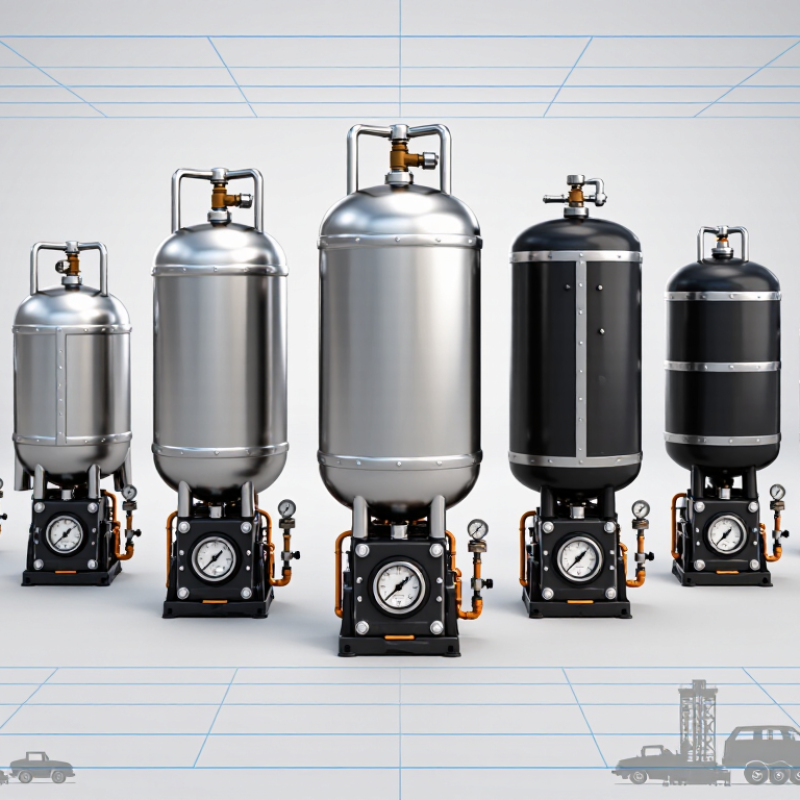
Top 10 Gas Tank Manufacturers in the World

Definition and Role of Gas Tank Manufacturers

Top 10 Gas Tank Manufacturers in the World

Definition and Role of Gas Tank Manufacturers

Gas tank manufacturers design and produce containers for compressed, liquefied, and cryogenic gases. Their products include steel cylinders, composite vessels, bulk storage tanks, and transport containers. These tanks preserve pressure, temperature, purity, and structural integrity during storage and distribution. According to the International Energy Agency’s Gas Market Report, global LNG trade reached about 404 million tonnes in 2023. That volume requires dependable tanks at terminals, factories, transport hubs, and industrial sites.

The World LPG Association’s 2024 Statistical Review estimates global LPG demand at roughly 330 million tonnes in 2023. Manufacturers therefore serve households, energy companies, hospitals, food processors, and heavy industries. They calculate wall thickness, fatigue resistance, thermal contraction, valve protection, and corrosion exposure. Compliance with standards such as ISO, EN, and ASME supports testing and traceability across markets. Small design errors can create major operational risks. That is why qualified manufacturers inspect welds, pressure-test vessels, and document every production batch.

A manufacturer’s role does not end at delivery. Technical guidance, inspection schedules, repair support, and recycling plans influence tank safety over many years. Digital monitoring can also track pressure, temperature, and service history. Still, industry rankings remain imperfect. Public data often compares revenue, capacity, or shipment volume, but these measures do not show engineering quality equally. A smaller producer may deliver stronger specialized performance than a larger mass-market supplier.

Criteria for Evaluating the World’s Leading Manufacturers

Top 10 Gas Tank Manufacturers in the World: Criteria for Evaluating the World’s Leading Manufacturers

Choosing a leading gas tank manufacturer requires more than comparing prices or production volume. Evaluate engineering experience, material quality, and verified safety performance. Manufacturers should provide clear specifications, pressure ratings, weld inspection records, and traceable material certificates. Independent testing adds credibility. So does transparent documentation. Check whether the company understands different climates, transport conditions, and installation environments. A tank used near coastal air needs different protection from one installed in a dry inland facility.

Manufacturing consistency also matters. Review factory quality systems, inspection procedures, and evidence of pressure or leak testing. Strong suppliers explain their design decisions instead of using vague claims. Their technical teams should answer practical questions about corrosion, maintenance access, valve protection, and expected service life. After-sales support is another useful measure. Spare parts, technician training, and responsive communication can prevent small defects from becoming costly failures. However, published information may not reveal everything. Site visits and customer references can expose weaknesses that brochures hide.

Tips: Compare several manufacturers using the same checklist. Ask for recent test reports, warranty terms, maintenance guidance, and delivery records. Confirm that local installation requirements are understood. Do not treat a low quotation as proof of efficiency. I would also question unusually perfect performance claims. Real equipment ages, and maintenance needs vary. A reliable manufacturer discusses limitations openly, including inspection intervals, coating wear, and possible delays in replacement parts.

Global Gas Tank Industry Structure and Market Distribution

The global gas tank industry is divided into household cylinders, vehicle tanks, and large industrial vessels. Each segment follows different pressure, material, and testing requirements. Household demand remains strong in Asia, Africa, and Latin America, where LPG supports cooking and small businesses. Distribution often depends on local filling stations and replacement networks.

Industrial gas tanks are concentrated near steel, chemical, food-processing, and healthcare clusters. East Asia has a dense manufacturing base and wide export capacity. Europe emphasizes energy efficiency, traceability, and strict inspection routines. North America shows steady demand for storage systems serving transportation, agriculture, and regional energy projects. The Middle East also supports large-scale storage because of its established energy infrastructure.

Market leadership depends on more than production volume. Reliable manufacturers invest in automated welding, corrosion control, pressure testing, and documented quality systems. Field experience matters when tanks face salt air, rough roads, or repeated temperature changes. Certification requirements differ by market, creating extra design and documentation costs. This remains a weakness for smaller producers.

Safety is practical, not decorative. A poorly maintained valve can disrupt an entire supply chain. Buyers increasingly compare service life, repair access, delivery speed, and inspection support. Price still influences purchasing decisions, especially in developing markets. Yet low initial cost can hide higher maintenance expenses. Industry data also remains uneven across regions, so market rankings should be treated as informed estimates rather than absolute facts.

Top 10 Gas Tank Manufacturers in the World

Global Gas Tank Industry Structure and Market Distribution

The chart compares representative nominal service-pressure classes used across major gas-tank applications. LPG cylinders generally operate at lower pressures, while industrial compressed-gas, CNG, and hydrogen storage systems require progressively higher pressure levels. The figures are engineering reference values rather than company-level market shares.

Reference basis: commonly used international pressure classes for LPG cylinders, industrial compressed-gas cylinders, CNG vehicle tanks, and hydrogen storage systems.

Top 10 Gas Tank Manufacturers by Expertise and Product Range

Top 10 Gas Tank Manufacturers in the World

A credible Top 10 ranking should measure expertise, not factory size alone. The best manufacturers serve several pressure-vessel segments, including LPG cylinders, CNG modules, cryogenic tanks, and hydrogen storage systems. Their product range may include steel, aluminum, and composite designs. Each material answers a different need. Weight, corrosion resistance, pressure rating, and service life all matter.

The International Energy Agency’s Global Hydrogen Review 2024 reports that announced low-emissions hydrogen projects could reach 49 million tonnes annually by 2030. However, only a small share has reached final investment decisions. That gap increases the value of manufacturers with tested engineering, flexible production, and reliable certification processes. Strong candidates also demonstrate compliance with standards such as ISO 9809, ISO 11120, and relevant regional pressure-equipment rules.

A practical ranking should examine more than brochures. It should compare burst testing, traceability, valve integration, inspection support, and field performance. Production capacity matters too. So does customization. Some manufacturers excel in household cylinders but lack large industrial systems. Others build advanced tanks but offer limited maintenance support.

The ranking is not perfectly clean. Public data often combines tank sales with wider energy-equipment revenue. This can distort comparisons. Buyers should review independent test records, audit results, warranty terms, and delivery history. Expertise is proven under pressure, not promised in advertising. Product range helps, but reliability remains the harder measure.

Safety Standards, Innovation, and Future Industry Trends

Evaluating the top ten gas tank manufacturers requires more than production volume. Safety begins with certified materials, precise welding, and pressure testing under controlled conditions. Manufacturers should follow recognized pressure-vessel codes and maintain traceable inspection records. Independent audits add credibility, especially when tanks serve hospitals, transport fleets, or industrial facilities.

Small details matter. Inspectors check valve protection, corrosion resistance, emergency shutdown systems, and readable labels. Modern factories increasingly use automated welding, robotic inspection, and digital twins to detect weaknesses before delivery. Smart sensors can monitor pressure, temperature, and wall stress in real time. These tools improve maintenance, but they also create cybersecurity concerns that many companies still underestimate.

Future leaders will design lighter tanks without reducing impact resistance. They will also support cleaner gases, modular storage, recyclable materials, and lower-energy manufacturing. Hydrogen and other alternative fuels may expand demand, although storage challenges remain significant. A reliable manufacturer should publish test data, explain failure procedures, and train users clearly. Marketing claims are not enough. No factory is flawless, and even advanced systems can fail through poor installation or neglected maintenance. That uncomfortable point deserves more attention. Industry rankings should therefore measure long-term field performance, repair response, worker training, and transparency, not only output or technological appearance.

Top 10 Gas Tank Manufacturers in the World - Safety Standards, Innovation, and Future Industry Trends

An anonymized, standards-focused overview of ten major gas-tank manufacturing segments. Rows describe product categories, not ranked or individually identified companies; applicable requirements depend on product design and jurisdiction.

No. Manufacturer Segment Typical Tank Type and Materials Relevant Standards and Codes Safety and Innovation Focus
1 Stationary LPG vessel manufacturers Welded carbon-steel pressure vessels for above-ground or underground storage. ASME Boiler and Pressure Vessel Code, Section VIII; EN 13445. Installation rules such as NFPA 58 may also apply. Weld-quality assurance, corrosion protection, pressure-relief devices, and improved inspection and leak detection.
2 Refillable LPG cylinder manufacturers Portable welded steel cylinders; designs and capacities vary by market. ISO 22991 for refillable welded steel gas cylinders; local transport and cylinder rules may apply. Valve protection, traceability, periodic inspection, and durable corrosion-resistant finishes.
3 Seamless industrial gas-cylinder manufacturers Seamless steel cylinders for compressed industrial gases; some product lines use aluminum alloys. ISO 9809 series for refillable seamless steel gas cylinders; requirements depend on cylinder design and gas service. Material traceability, nondestructive testing, controlled heat treatment, and reliable cylinder identification.
4 CNG vehicle-cylinder manufacturers Compressed natural gas cylinders, including all-metal and composite-reinforced designs. ISO 11439 and UN Regulation No. 110 are relevant references for natural-gas vehicle cylinders and components. Impact and fire protection, periodic inspection, lightweight composite designs, and cylinder-life monitoring.
5 High-pressure gas tube manufacturers Large-capacity seamless steel tubes used for gas transport and storage in suitable systems. ISO 11120 covers refillable seamless steel tubes of water capacity from 150 L to 3,000 L. Fatigue-life management, inspection of tube ends and valves, and secure transport-system integration.
6 Large LNG storage-tank system manufacturers Insulated cryogenic tank systems; designs may use inner tanks of nickel steel, stainless steel, or aluminum with engineered outer containment. API 625 for refrigerated liquefied-gas storage tank systems; NFPA 59A applies to LNG facilities in relevant jurisdictions. Containment integrity, boil-off-gas management, thermal monitoring, and emergency isolation systems.
7 Transportable cryogenic-vessel manufacturers Vacuum-insulated vessels for transporting cryogenic fluids, including liquefied gases. ISO 21029-1 covers transportable vacuum-insulated cryogenic vessels; transport regulations also apply. Vacuum-jacket integrity, pressure-relief protection, reduced heat ingress, and robust transport fittings.
8 LNG fuel-tank system manufacturers for vessels Marine LNG fuel-storage systems using insulated tanks and associated piping and safety equipment. The IMO International Code of Safety for Ships using Gases or other Low-flashpoint Fuels (IGF Code) is a key ship-safety framework. Gas detection, ventilation, bunkering safety, emergency shutdown, and integration with vessel systems.
9 Industrial process-gas pressure-vessel manufacturers Engineered vessels for gas buffering, process storage, and plant operations; materials are selected for pressure, temperature, and gas compatibility. ASME Boiler and Pressure Vessel Code, Section VIII, or EN 13445, depending on the design basis and market. Design-by-analysis, corrosion allowances, instrumented monitoring, and risk-based inspection programs.
10 LPG vehicle fuel-tank manufacturers Vehicle-mounted LPG tanks, commonly welded steel designs with dedicated fuel-system components. UN Regulation No. 67 addresses LPG equipment and vehicle-specific requirements in markets that apply it. Crash protection, multivalve safety features, secure mounting, and compatibility with vehicle fuel controls.

Standards listed are examples of relevant references, not a complete compliance checklist. The required edition and applicable rules should be confirmed with the authority having jurisdiction and the project’s certification body.